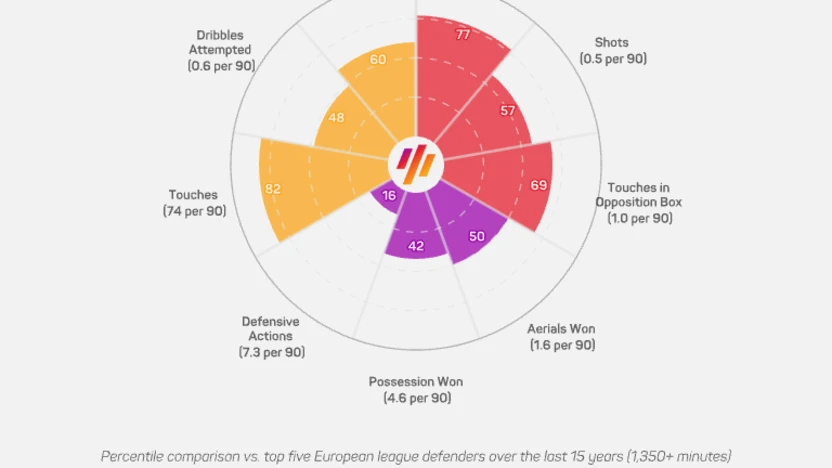
It’s been a fantastic debut season for Dan Nimick with Forge FC, and that continued this week, as he earned a nomination for the Canadian Premier League’s Defender of the Year and was a finalist for the Player’s Player of the Year.
Given his role on a Forge team that conceded just 22 goals in 28 regular-season games, it’s a pair of deserved honours, too, as he played all but 16 minutes in league play to help his side to a second straight CPL Shield.
Now, his team will be hoping he can continue that excellence in the playoffs, where they now find themselves with their backs against the wall, as they get set to take on Cavalry FC in the Contender Semifinal.
After falling 2-1 to Atlético Ottawa in the Championship Semifinal, it’s a massive match for Forge, who are looking to reach their seventh straight CPL Final.
If they’re to get there, however, it’ll be imperative that they return to what made them so successful in the regular season - their strong defensive play. Not only did they concede just 22 goals, but they conceded two or more goals just five times, and only conceded more than two goals once, showing why they’ll be frustrated to have conceded two to Ottawa last week.
To that point, though, it leads to some important questions - what has been the key to Forge’s defensive success, and how has Nimick factored into that?
Namely, the big key for him has actually been on the ball - as the saying goes, a good offence is a good defence, and in that regard, there might be none better than Nimick when it comes to jumpstarting attacks from the back.
To date, through 29 regular-season and playoff games this season, he’s completed 1624 out of 1789 passes (91%), including 204 out of 291 long balls (70%). In particular, that last figure is quite noteworthy, as most players would be content to hover around 50% in that category, especially considering the volume of long passes Nimick attempts.
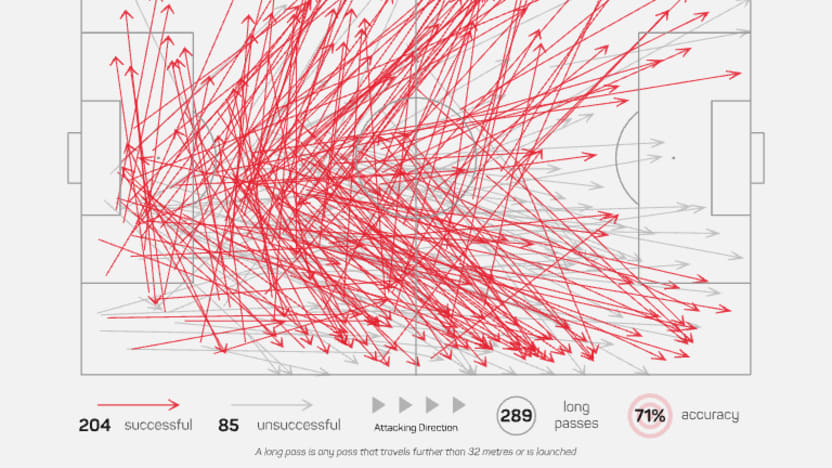
In fact, the only one who had more successful long passes than him in the CPL this year was Vancouver’s goalkeeper, Callum Irving, with 219 - but to reach that number, he attempted 531 long balls, mostly coming off goal kicks and things of the like, showing how impressive it is for Nimick to have such a high completion rate considering how often Forge tries to build out of the back.
What that shows is that Nimick isn’t the sort of defender that specializes in simple ball retention - he’s a legitimate weapon when building out of the back. To that point, he also had four assists, which was second on his team behind Hoce Massunda, just giving an idea of how effective a playmaker he was from deeper positions, helping Forge score an impressive 51 goals and generate 52.27 Expected Goals - the former figure was second in the league, and the latter figure was top in the league.
That’s important to note, as one of Forge’s biggest strengths defensively was that they did a good job to avoid giving away the sort of goals that have become prevalent in the modern game - turnovers and quick transitions. They became just the second team ever (after 2023 Atlético Ottawa) to go a whole season without conceding a goal from an error, as they hardly ever made a mistake when building out of the back, and while that made them more dangerous up front, it also made them less prone to conceding sloppy goals defensively.
“It’s something we want from them,” Forge’s head coach, Bobby Smyrniotis, said earlier this year. “We’ve got a defensive unit that can definitely shut down an opponent, but they can play with the ball.”
Considering that Nimick launched most of their attacks, sitting in the middle of Forge’s back three in the build-up play, it shows why his passing numbers are important to highlight - and, despite all of the touches he had on the ball, he didn’t even make a mistake that led to a shot, either, further showing that his success in possession was no fluke.
In the modern game, defenders have a big role to play on the ball, and while that can have big effects on how their teams attack, it also serves as a way for teams to actively defend, especially if they can limit mistakes the way Nimick has.
“It’s been really nice to be able to find those split lines, and to play those long balls, which suit my game,” Nimick told CanPL.ca back in August.

Of course, defenders must still be able to defend when their teams lose the ball, and Nimick still did a lot of that this year.
He wasn’t flying into tackles, making just 19 of those, or even racking up interceptions, making only 24 of those. Instead, he quietly protected his box, making 115 clearances, which was fifth in the league, and also snuffed out a lot of threats before they became dangerous, making 136 recoveries, which was 12th in the league.
Granted, part of that comes down to Forge’s style of play, as they’ve got a strong midfield that wins a lot of duels to protect their backline, meaning that their centre backs are tasked with defending space, but as seen by those numbers, that’s a task that Nimick tackled head-on (pun not intended).
That doesn’t mean that he didn’t get stuck in - he won an impressive 119 out of 166 duels (71.7% rate), including 45 out of 65 aerial duels (69%) - but his best work came when he used his anticipation to snuff out dangerous balls in behind or crosses into the box, hence the high number of clearances and recoveries.
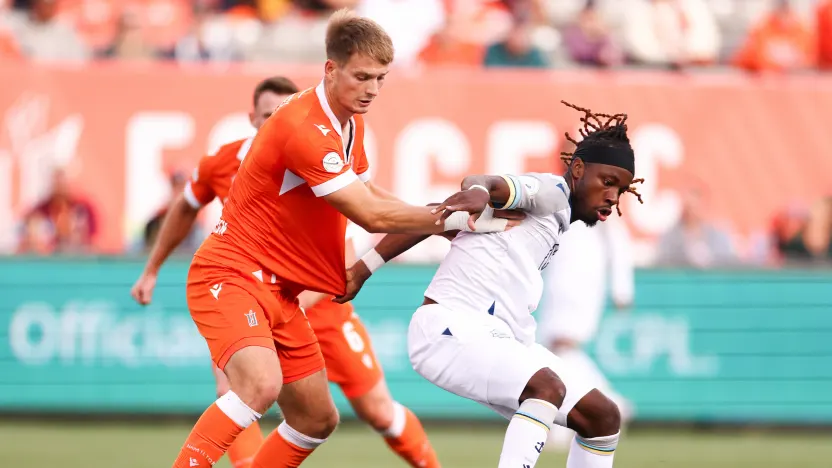
Through that, he helped Forge concede a league low 17 goals inside their box (the next best team conceded 25 of those), as they only conceded a league-low 297 shots, period.
Credit has to be given to Nimick for that, as despite only arriving at the club this offseason, he quickly became part of his team’s fabric, something that isn’t always easy to do, especially not on a side that enjoyed as much dominance as Forge did in regular-season play.
Now, they’ll look to keep that momentum rolling as they chase a fifth North Star Cup, something that Nimick would love nothing more than to achieve - his match against Ottawa was just his second playoff appearance, period, which pales in comparison to some of his Forge teammates.
With strong defensive play becoming even more important in the playoffs, it’ll be important for Nimick to keep building on what he did all season, and to his credit, he still had a solid outing despite Forge’s loss - he completed 63 out of 72 passes (88%), including 7/11 long balls (while creating a big chance), while also making one tackle, five clearances, one interception and seven recoveries.
He struggled a bit in his duels, winning just three of seven, and will want his team’s second goal back, as he didn’t mark Sam Salter as tightly as hoped, but he’ll look to put that behind him against a tough Cavalry side, the only team to have scored more than two on Forge this season, having beat them 4-1 at the end of August.
Given Forge’s defensive success all year long, it’s fair to call that game a blip, so look for them to rely on Nimick to lead the bounceback, on both sides of the ball, as he shows why he’s distinguished himself among his peers at his position, and even among the rest of the league.