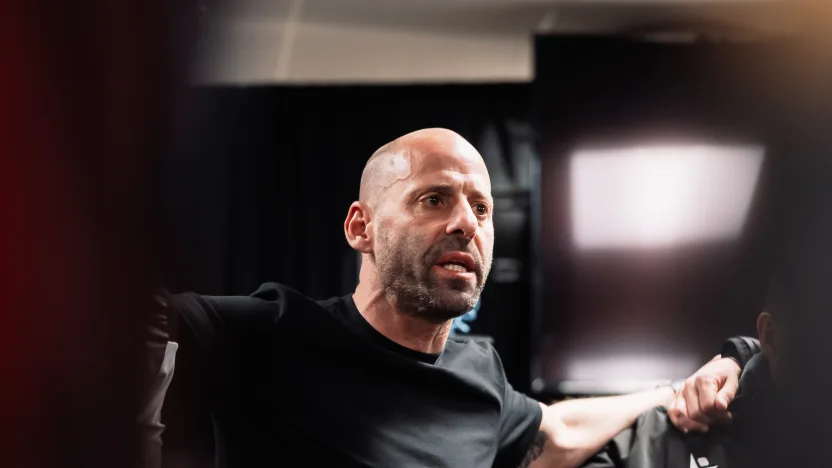
An entire nation wearing red.
A national team galvanized and inspired by the rampant support, spurred on to new heights. On home soil, they stun the world, defeating some of the most storied nations in the sport. The trajectory of the game in the country is forever changed.
That is the dream for many Canadians next year, as the Canadian men's national team hosts FIFA World Cup matches for the first time.
Vancouver FC head coach Afshin Ghotbi lived that dream. Only, in his case, it was the red of South Korea, with which Ghotbi was an assistant coach at the 2002 FIFA World Cup in Korea and Japan. As a co-host, South Korea went on a historic run, reaching the semi-finals -- the best-ever performance by a team from Asia at a FIFA World Cup.
"The whole country became red, the whole country became united, the whole country got behind the team," said Ghotbi. "And the rest is history."
Now, 24 years later, Ghotbi believes the 2026 FIFA World Cup co-hosted by Canada, the United States and Mexico could be a transformational moment for the sport in Canada.
It is a big part of why he is here, why he believes in what is being built at Vancouver FC and the Canadian Premier League, and in the exciting future of soccer in Canada.
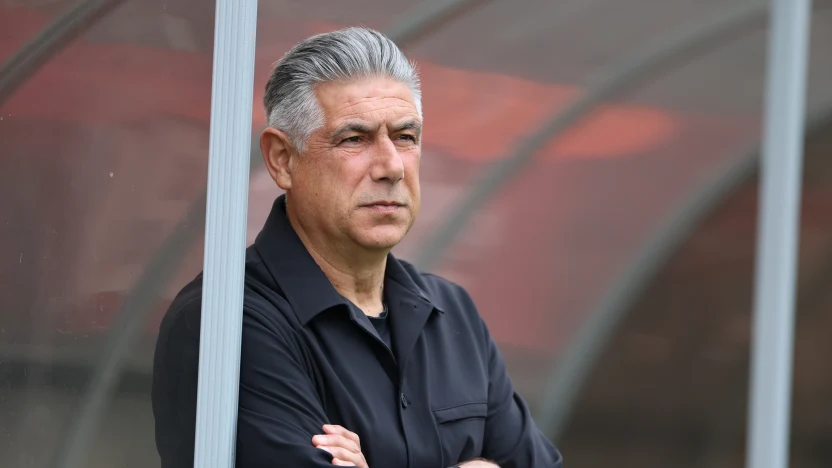
Ghotbi's first World Cup experience came at France 1998 as an assistant coach with the United States men's national team.
A 34-year-old Ghotbi had been brought on six months prior to the tournament by Steve Sampson, then the United States men's national team coach. Sampson had coached Ghotbi at UCLA, but also knew that the electrical engineering graduate was brilliant with computers and capable of using software to help the team analyze matches and create tactical models.
After three months in Lyon preparing for the tournament, Ghotbi will never forget arriving at the train station in Paris before the United States' first match of the 1998 World Cup against Germany.
"There were thousands of Americans with American flags, and just goosebumps," said Ghotbi. "Then the bus ride from the train to the hotel, going through the Champs-Élysées, going by the Eiffel Tower, and seeing people from all over the world, coming to where the World Cup was going to be held, supporting their own country, I can't even explain that feeling."
While the United States failed to get out of a difficult group, Ghotbi made an impression at the tournament, and word started to spread around the footballing world about this young coach with knowledge of how to use technology to create analytical football models.
He was invited to give a presentation for the Dutch Football Federation on using emerging technology in match preparation. One of the coaches in attendance was Guus Hiddink.
When Hiddink took over as the head coach of South Korea in 2001, he made Ghotbi part of his staff for the 18-month buildup to co-hosting the 2002 FIFA World Cup. The team essentially operated as a club team during that time, touring the world, with many players leaving their clubs during non-FIFA international window dates. They played nations like England, France, Czechia and Uruguay (in Uruguay) as part of their preparation.
That paid off, as South Korea began the tournament by topping their group, defeating Poland and Portugal, and drawing with the United States.
"Everyone was in the streets celebrating the success of the team, and as the team progressed in the tournament, the World Cup became more and more important," said Ghotbi. "The Korean players became heroes for the country."
In the round of 16, they faced a heavily favoured Italian team. When star Italian striker Christian Vieri opened the scoring with a header in the 18th minute, it looked as though South Korea's magic had finally run out. In the 88th minute, however, the hosts equalized, forcing extra time. In the 117th minute, Ahn Jung-Hwan scored the Golden Goal and Korea stunned the world to advance.
Four days later, South Korea beat Spain on penalties in the quarter-final, setting up a semi-final with the mighty Germans. Again, the hosts kept things close, but in the 75th minute, Michael Ballack struck with a goal that ended their run.
"I think the semi-final loss to Germany kind of struck me, because we were 90 minutes away from playing in the final of the World Cup," said Ghotbi.
He says the tournament, and the national team's performance, not only impacted the footballing side of the country, but were vital in bringing South Korean culture and commerce to the world. Korean companies and cultural exports like K-Pop started to become more popular around the globe.
Ghotbi ended up returning to coach South Korea as an assistant for the 2006 World Cup in Germany under Dick Advocaat. There, he got to experience Germany's own football revival of sorts, where he saw the country's population demonstrate national pride in a way that hadn't been seen in many years.
Ghotbi nearly reached a fourth World Cup, one that would have been particularly meaningful. In 2009, he was brought in with three games remaining in the qualifying campaign of his birth nation, Iran. After a 0-0 draw with North Korea in Pyongyang and a 1-0 victory over the United Arab Emirates, they went into their final group game in Seoul, South Korea, needing a win in order to qualify.
Iran took a 1-0 lead in the 52nd minute, and held it until the 82nd, when Park Ji-Sung broke their hearts with an equalizer. The match ended 1-1, and so did Iran's World Cup hopes.
"To this day, I feel such sadness about that moment, because that would have been one of the most phenomenal moments in my life, of taking the team to the World Cup as the manager," said Ghotbi, "and we missed it by literally eight minutes."
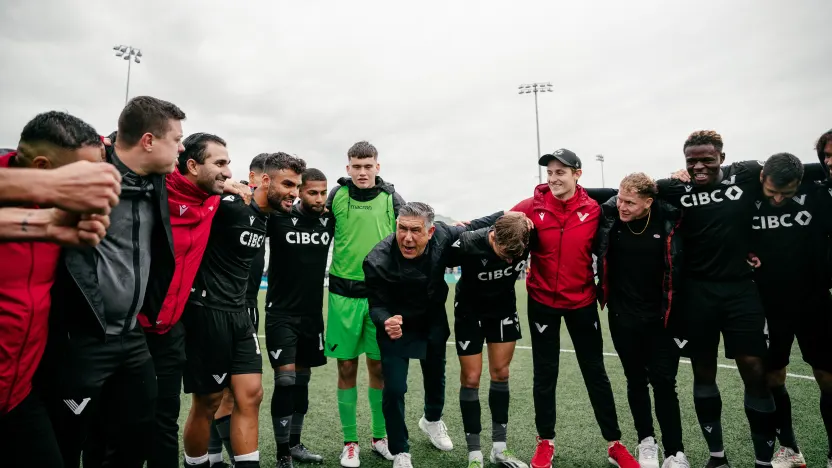
In 2022, Ghotbi moved to Canada to become the first-ever coach of Canadian Premier League expansion side Vancouver FC.
A big part of that move was to use his boundless international experience to aid in the growth of the game within the developing football nation, while also using the momentum of a home World Cup to grow Vancouver FC into something special.
"I do believe Canada will become a major football power," said Ghotbi. "Because I see already all the components that are helping it grow, from [The Canadian Premier League], from all the young players that are growing and coming into the game."
While he says that growing the game in Canada right now might feel a little bit like an uphill battle, the major scale shifter that is the World Cup has the immense potential to change everything about the way the sport is perceived across the country.
"The United States was the same," said Ghotbi. "I was there in the late 80s, 90s, I saw what the game was. I see where it is after the 94 World Cup. I saw in Korea how even in 2000 people didn't know what the World Cup was. They didn't know what football was. And then after the World Cup, everything changed, and I'm hoping the same will happen in Canada."
As for what advice he would give Canadian men's national team coach Jesse Marsch and his players as they step into this once-in-a-lifetime opportunity, he thinks it comes down to embracing the moment for what it is: one of the most incredible events in the world.
"I think if they can just go into that moment, put aside everything else other than enjoy that moment, I think they can actually be more successful, because they become one with it," said Ghotbi. "They're able to operate in that subconscious side, which is really where the best football that we can play, and coaches can coach."
On Sunday, Ghotbi's Vancouver FC host Forge FC in a One Year Out match celebrating one year until Canada, and the Canadian Premier League, hosts the World in the summer of 2026. Ghotbi has seen firsthand how the momentum will ramp up across the country between now and then, and couldn't be more excited for the year ahead.
"Every day we get closer to the World Cup, it's like a drum beat that gets louder and louder and louder," said Ghotbi. "The enthusiasm, the excitement, and the colours, the sounds of the World Cup will just become more vivid, and eventually the World Cup will capture everyone's imaginations."